On November 5, Finance Minister François-Philippe Champagne tabled the 2026 Federal Budget. It is a big one. It has two main themes: a large new tax break for some business owners, and a long list of changes meant to make tax filing simpler for Canadians. Here are the points most likely to affect you.
For individuals and families
- New filing deadline. Starting with the 2027 tax year, the personal tax filing and payment deadline moves to May 15 for everyone. The deadline for self-employed people stays at June 15. Your 2026 return is still due April 30, 2027.
- “RRSP for life.” The government wants to merge the RRSP and RRIF into one plan, so you would no longer have to convert your RRSP to a RRIF at age 71. Minimum withdrawals would still apply after 71. The government is also looking at letting a spouse take over the plan directly on death. This is still a proposal, and comments are open until January 8, 2027.
- Lower CPP contributions. The base CPP contribution rate is going down, so you and your employer will both put in less from each pay. Your CPP benefits are not reduced.
- Unclaimed pensions. Sometimes a pension plan can’t find a former employee, or doesn’t know they have died, and a surviving spouse never receives the survivor benefits they’re owed. Under the proposal, CRA would be allowed to tell a pension plan when a member has died, so those benefits get paid. If you think a family member may have had a pension through a former employer, please let us know.
- Fewer receipts to keep. Starting in 2027, you can claim some deductions and credits as flat amounts instead of adding up every receipt. Examples are moving expenses ($1,000), the Home Accessibility Tax Credit ($1,000, once in a lifetime) and adoption expenses ($1,200 per child). Optional flat amounts are also proposed for some medical expenses. You still need to qualify.
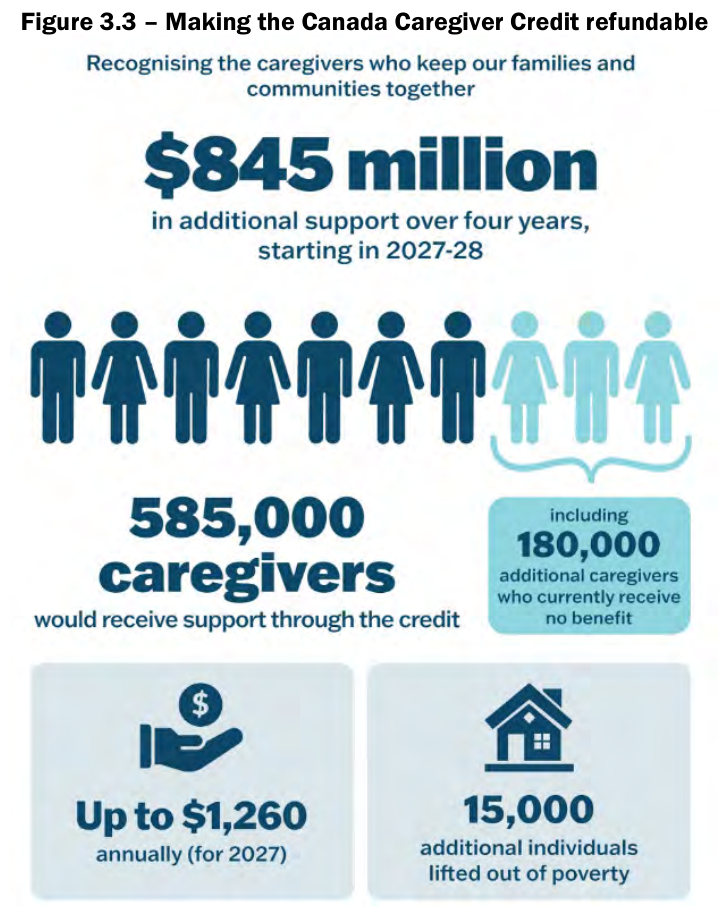
- Caregiver credit becomes refundable. Starting in 2027, the Canada Caregiver Credit can pay you money back even if you owe no tax.
- Foreign property reporting. You will only need to file Form T1135 if your foreign property costs more than $200,000, up from $100,000. This starts after 2026.
- More time to object. You will have one year to file a notice of objection to a tax assessment. Individuals will have up to two years from their filing deadline.
- One-time benefit top-up. Lower- and modest-income households will receive a one-time Canada Groceries and Essentials Benefit supplement in early 2027.
- RDSP access. A qualifying family member will be able to open an RDSP for an adult who cannot sign the contract and has no legal representative. This starts in 2027.
- Credit card payments. Ottawa will consult on a rule that would apply any credit card payment above the minimum to your highest-interest balance first, so you pay off expensive debt faster.
- Crypto. Crypto platforms are required to report their users to CRA. Unlawful crypto ATMs, often used by scammers, are being banned. Banks can not issue stablecoins (digital dollars) directly; they must use a separate subsidiary. The rules for those subsidiaries are still being worked out.
For the self-employed
- Higher instalment threshold. Starting in 2028, you will only need to pay quarterly instalments if you owe more than $7,500 in tax ($4,500 in Quebec).
- One payment a year. Starting in 2028, people whose main income is from a business or commissions can pay one instalment by December 31 instead of four.
- Commission employees will be able to claim more of their employment expenses starting in 2027.
For business owners
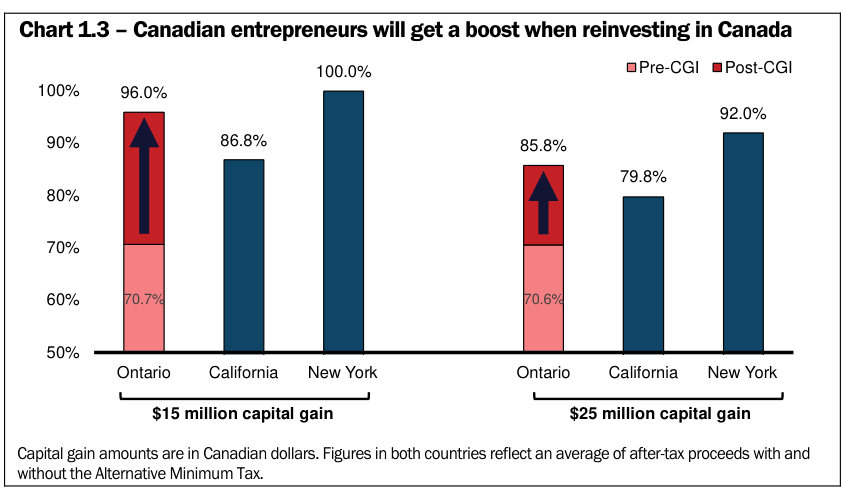
- $15 million Canada Growth Incentive. This is a new capital gains exemption on the sale of qualifying shares in Canadian businesses. The rules are strict. Consulting, professional practices, real estate, farming, fishing, franchises and several other sectors are excluded. If you claim it, you limit your use of the regular lifetime capital gains exemption on the same shares.
- Family farms and fishing businesses. Starting January 1, 2027, these can be passed on tax-deferred to nieces, nephews, grandnieces and grandnephews.
- Less paperwork and better tools. Corporations will no longer need to file directors’ resolutions with certain elections. The government is also consulting on letting related corporations transfer losses to one another.
For Albertans
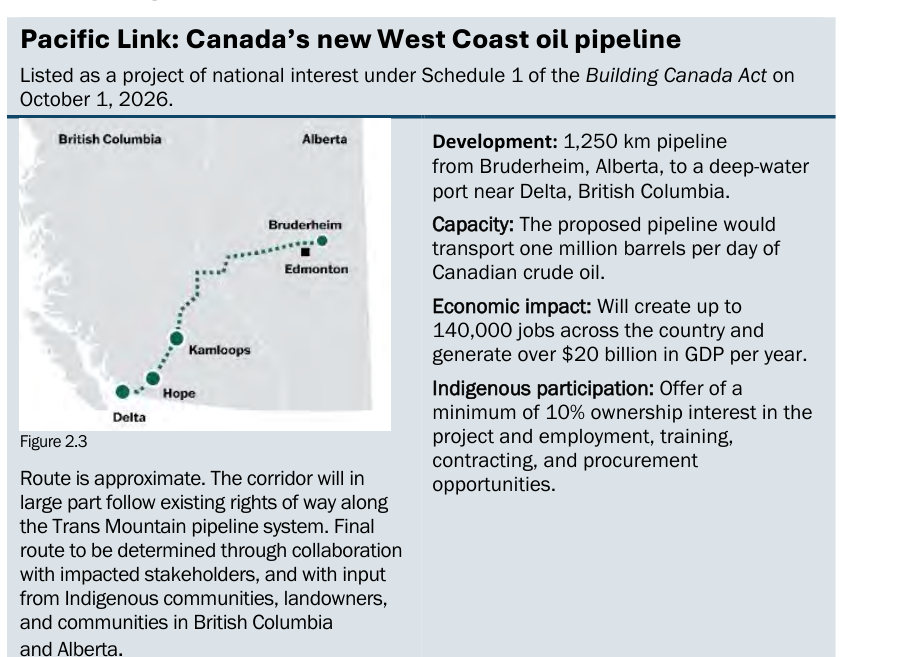
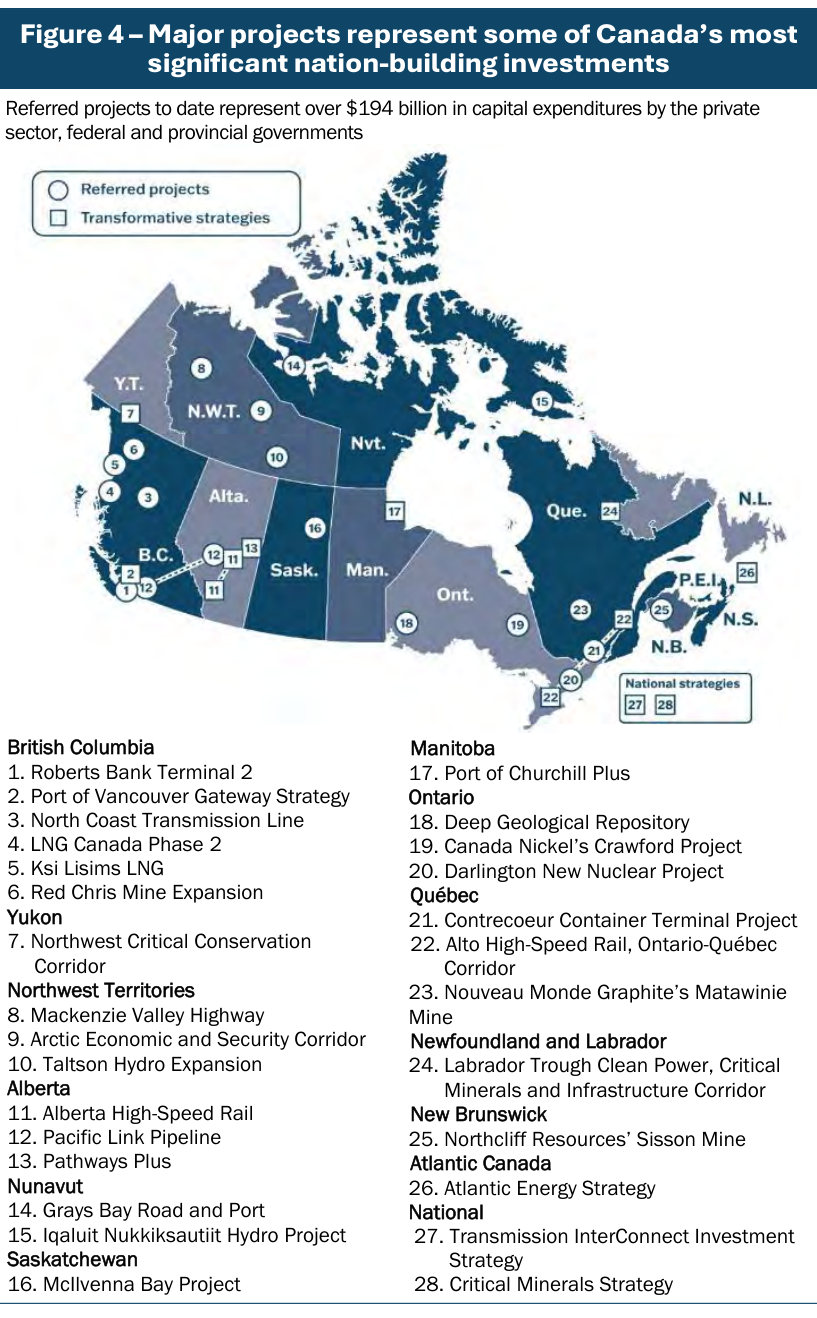
- Pacific Link pipeline. Ottawa has named a new West Coast oil pipeline a project of national interest. It would run 1,250 km from Bruderheim, Alberta, to a port near Delta, BC, and carry one million barrels a day. The government expects it to create up to 140,000 jobs.
- Gas prices will go back up. The federal fuel excise tax is suspended until January 31, 2027. It returns at half rate for February and March, then at the full rate on April 1, 2027. That adds up to about 10¢ a litre at the pump.
- Carbon pricing for industry. Ottawa plans to update its industrial carbon pricing rules and to link provincial carbon markets more closely. This could affect Alberta’s energy sector and the companies many of us invest in.
- Major projects. Alberta High-Speed Rail is on the federal list of major projects. Ottawa has also offered Indigenous groups in Alberta and BC a combined 15% ownership stake in the Trans Mountain pipeline.
Coming in 2027: Canada Strong Notes
The government plans to launch a retail investment linked to Canada’s new $25 billion sovereign wealth fund. The Notes are proposed to protect your original investment, pay a coupon, and share in the fund’s returns. We will share details when they are released.
What comes next
Most of these measures are proposals and are not law yet. More changes are expected in the 2027 Spring Economic Update. If you would like to talk about how Budget 2026 affects your retirement plan, your RRSP or your business, please reply to this email or book a call.
Thank you.
Kind Regards,
Joanne
Source
This letter is for general information only and is not tax or legal advice. Budget measures are proposals until they become law.
Joanne David
CFP · FCSI · Fee-Only Financial Planner · Edmonton, Alberta
25+ years helping professionals, engineers, women, and business owners in BC, Alberta, and Saskatchewan make smarter financial decisions.
Book a free 20-minute call with Joanne →